
The Creek Chiropractic & Wellness
Therapeutic Massage in Battle Creek
When muscles stay tight and guarded, even a perfect chiropractic adjustment can lose its hold within hours. Therapeutic massage at The Creek Chiropractic & Wellness releases that underlying tension, calming the nervous system, improving circulation, and giving your adjustments the relaxed tissue they need to hold longer. Dr. Leatherman's team pairs licensed massage therapy with chiropractic care so Battle Creek patients see faster relief and results that actually stick.
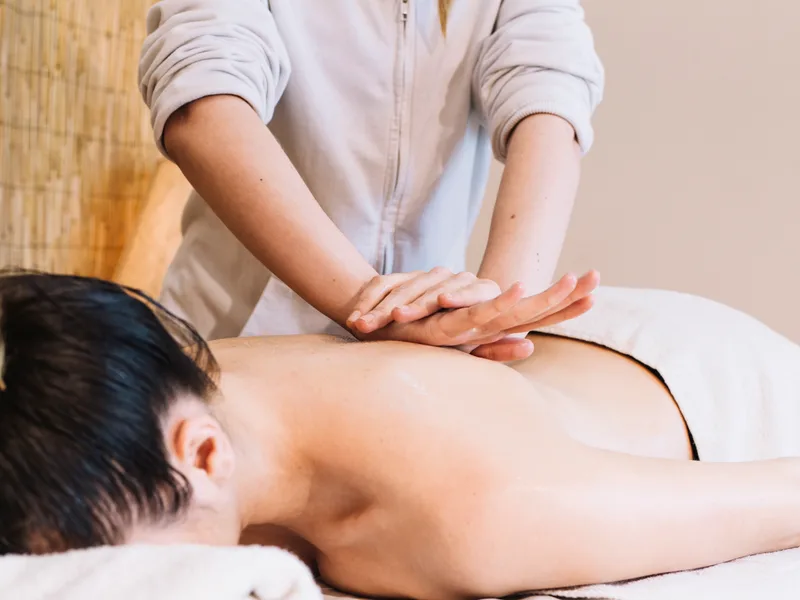
What is therapeutic massage?
Therapeutic massage is a clinically directed form of soft-tissue therapy, distinct from a spa massage in that it targets specific muscles and movement patterns connected to your pain, injury, or recovery goals. Your therapist draws on Swedish, deep-tissue, and trigger-point techniques to release muscle spasms, break up fibrous adhesions, and restore healthy blood flow to overworked or injured tissue.
At The Creek Chiropractic & Wellness, massage is integrated with your chiropractic care plan from the start. That means your therapist and Dr. Leatherman are working toward the same goal, not two separate professionals doing their own thing.
Who it helps
Common reasons people seek therapeutic massage
Therapeutic massage is commonly used to treat:
Why patients choose it
Who can benefit from therapeutic massage
- Reduces muscle tension so chiropractic adjustments hold longer
- Improves circulation to speed tissue healing
- Calms the nervous system and lowers overall pain sensitivity
- Relieves tension headaches and neck stiffness
- Eases work-injury and whiplash recovery
- Supports better sleep and stress relief
If you have chronic tightness, poor posture, or simply feel like your adjustments aren't holding as long as they should, adding massage to your plan is often the turning point.
How it works
What to expect
Your first massage session starts with a brief intake where your therapist reviews your symptoms, history, and any areas Dr. Leatherman flagged during your adjustment exam. That information guides every decision, from how much pressure to which techniques and how long to spend on each area.
During the session you'll lie comfortably on a padded table. Your therapist works through the targeted areas with a combination of long, gliding strokes to warm the tissue and deeper cross-fiber work to release tight bands and trigger points. Communication is always open, so if the pressure is too much or not enough, say so.
Most sessions run 30–60 minutes. Many patients feel noticeably looser within the first session; the cumulative benefit builds as the tissue has time to reorganize and as your adjustments reinforce the new, relaxed position.

- Step 1
Thorough intake
We discuss your symptoms, injury history, and goals before your session so your massage therapist knows exactly which muscles to target and how deep to go.
- Step 2
Targeted soft-tissue work
Your therapist applies the right techniques, whether Swedish, deep tissue, trigger-point release, or a blend, to break up adhesions, ease spasms, and restore healthy circulation to the affected area.
- Step 3
Integrated with your care plan
Massage is timed around your adjustments so the two therapies amplify each other, with relaxed tissue responding better to manipulation and the adjustment reinforcing what the massage just freed up.
What it helps
Related conditions we treat with therapeutic massage

















Explore more
Related services


Should I get a massage before or after my adjustment?+
Either works. Many patients prefer massage first to relax tight muscles so the adjustment holds longer. We'll tailor it to you.
What is therapeutic massage?+
Therapeutic massage is the targeted use of soft-tissue techniques, such as Swedish strokes, deep-tissue pressure, and trigger-point release, to reduce muscle tension, improve circulation, and calm the nervous system. Unlike a spa massage focused on relaxation, therapeutic massage is directed at specific areas tied to your pain or injury.
Does therapeutic massage hurt?+
It shouldn't. Some deep-tissue work can feel intense on very tight muscles, but it should never be sharp or unbearable. Tell your therapist at any point and they'll adjust the pressure. Most patients leave sessions feeling noticeably looser and lighter.
How many massage sessions will I need?+
It depends on your condition. Acute neck pain or whiplash may resolve in 4–8 sessions combined with adjustments. Chronic tension patterns built up over years can take longer. After your exam Dr. Leatherman will include massage recommendations in your care plan so you know what to expect.
Is therapeutic massage safe?+
Yes, for the vast majority of patients it is safe and well tolerated. We screen for contraindications (blood clots, active fractures, certain skin conditions) during your intake. If there's any reason to modify or skip massage, your therapist will let you know before the session begins.
Will my insurance cover massage therapy?+
Some plans cover massage when it is prescribed as part of an active injury or chiropractic care plan. We'll verify your benefits before your first visit and explain any out-of-pocket cost up front so there are no surprises.
Can massage help tension headaches?+
Yes. Tension headaches are often driven by tight sub-occipital and upper-trapezius muscles at the base of the skull. Releasing that tissue, combined with chiropractic care for the cervical spine, is one of the most effective ways to reduce headache frequency and intensity.
How does massage complement chiropractic adjustments?+
An adjustment corrects joint alignment and motion; massage releases the soft tissue pulling the joint back out. Together they break the muscle-joint tension loop that keeps pain cycling. Many patients find their adjustments hold noticeably longer when massage is included in their care plan.
What is the difference between therapeutic massage and a spa massage?+
A spa massage is focused primarily on relaxation. Therapeutic massage is clinically directed — your therapist works from your intake history and care plan, targeting specific muscles and movement patterns tied to your pain, injury, or recovery goals.
Do you offer massage for work injuries?+
Yes. Therapeutic massage is an important part of work-injury recovery for patients from Battle Creek and the surrounding communities. We coordinate with workers' compensation when applicable and document your progress throughout care.
Disclaimer: We do not diagnose or treat conditions, diseases, or symptoms. Our care is centered on improving the neuromusculoskeletal system by addressing spinal subluxations and the subluxation complex. Any improvement in overall health or function is the natural result of restoring proper spinal alignment and supporting the body's innate ability to heal itself. For medical diagnosis or treatment, please consult a licensed medical professional.