Chiropractic care for scoliosis
Get to the root of your scoliosis
Also known as: Spinal Curvature, Curvature of the Spine
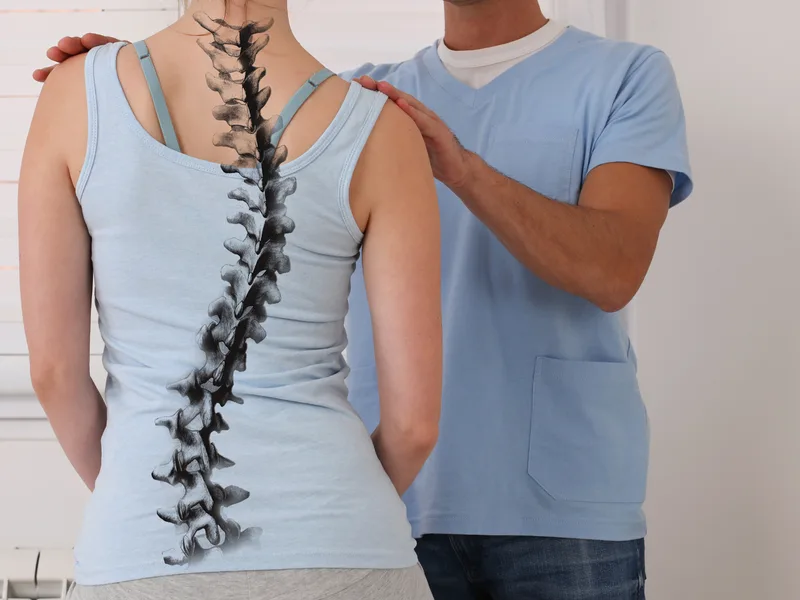
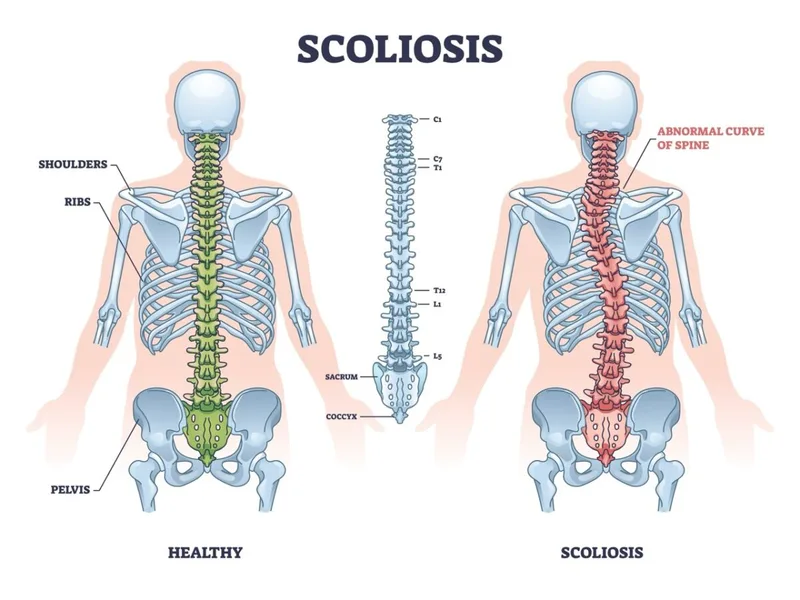
Scoliosis — a sideways curvature of the spine — affects millions of people across every age group, from adolescents in Battle Creek to adults in Battle Creek and Battle Creek. Chiropractic care won't straighten a curved spine, but at The Creek Chiropractic & Wellness, Dr. Leatherman uses a gentle, evidence-informed approach to help manage your symptoms: reducing pain, improving posture and mobility, and supporting your overall spinal health alongside any other care you're already receiving.
The basics
Understanding scoliosis
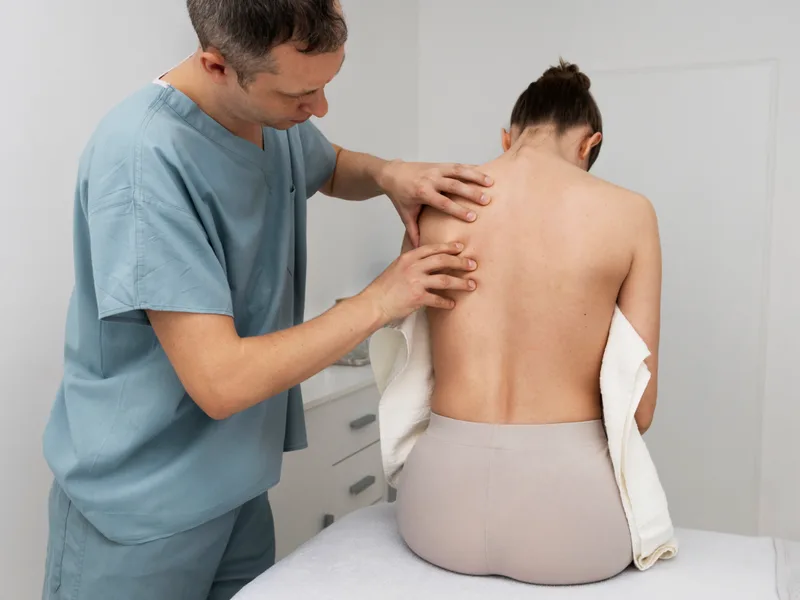
Patients from Battle Creek and the surrounding communities choose The Creek Chiropractic & Wellness because Dr. Leatherman tells the truth about what chiropractic can and can't do — and then delivers on what it can do. For scoliosis patients that means a focused combination of gentle chiropractic adjustments to restore joint mobility and reduce pain, and corrective exercise to build the muscular support your spine needs to function well despite its curve.
Many scoliosis patients also carry a heavy load of low back pain — we address both together rather than treating them as separate problems. And because scoliosis management is a long-term relationship, we keep your care plan honest, reassess regularly, and coordinate with any other providers on your team.
Scoliosis is defined as a lateral (sideways) curvature of the spine measuring 10 degrees or more on a standing X-ray. In most people the cause is never found — this is called idiopathic scoliosis, and it most commonly appears during the adolescent growth spurt between ages 10 and 16. Adults can also develop degenerative scoliosis as discs wear unevenly and vertebrae begin to shift over time, often layering new pain on top of an already-complicated spine.
It is important to be clear about what chiropractic care can and cannot do for scoliosis. Chiropractic does not straighten a curved spine and does not prevent curve progression. What it can do — and does well — is help manage the consequences of an abnormally curved spine: chronic muscle tension, restricted joint mobility, postural fatigue, and pain. By keeping the joints moving as well as possible and strengthening the muscles that support the spine, many patients experience meaningful improvement in their daily comfort and function. Moderate and severe curves, or any curve that appears to be progressing in an adolescent, require orthopedic co-management — at The Creek Chiropractic & Wellness we take that responsibility seriously and refer whenever it is in your best interest.
Who it helps
Symptoms of scoliosis
Why it happens
Common causes
Types of scoliosis we see
“Scoliosis” covers several distinct patterns, and what’s driving your curve shapes what conservative care can realistically offer.
- Adolescent idiopathic scoliosis — the most common type, appearing during the growth spurt (ages 10–16) with no identifiable cause. Chiropractic supports comfort and mobility alongside any orthopedic monitoring; we coordinate closely if the curve is still progressing. Related: back pain in adolescents.
- Degenerative (de novo) scoliosis — develops in adults as discs wear unevenly and vertebrae shift, often layering significant back pain and stiffness on top of the curvature. This type responds well to gentle adjustments and corrective exercise aimed at reducing pain and restoring function.
- Postural or functional scoliosis — a reversible curve caused by muscle imbalance, leg-length inequality, or habitual posture rather than a structural change in the vertebrae. Corrective exercise and postural rehab can meaningfully reduce or resolve the pattern.
- Neuromuscular scoliosis — curves secondary to conditions such as cerebral palsy or muscular dystrophy. These typically require specialist-led management; chiropractic may play a supportive role when appropriate.
We’ll identify your curve type during your evaluation and be straightforward about where conservative care fits in your overall plan.
Conservative, drug-free scoliosis care
Medication can quiet pain for a few hours; surgery is a major undertaking reserved for curves above roughly 40–50 degrees or rapidly progressing cases. For the many people in between — living with mild to moderate scoliosis that causes real daily discomfort — there is a third path.
At The Creek Chiropractic & Wellness, conservative scoliosis management focuses on three goals: reduce pain without drugs, improve how the spine moves despite the curve, and build the muscular support that makes everyday activity easier. We use gentle chiropractic adjustments to restore mobility to restricted spinal and rib joints, and corrective exercise to address the muscle imbalances the curve creates. For patients whose scoliosis is wrapped up in broader back pain or neck pain, we address those together rather than treating them as unrelated problems.
We’re honest that this approach manages symptoms rather than changing the curve — and that’s a meaningful distinction. But for patients who want to stay active, reduce reliance on pain medication, and feel better in their daily lives, it makes a real difference.
When to see a chiropractor in Battle Creek
You don’t have to be in severe pain to benefit from a scoliosis consultation. Consider booking an evaluation if you notice:
- Persistent mid- or lower-back pain or fatigue that you’ve been told is “just from your curve”
- Uneven shoulder or hip height, or one shoulder blade that protrudes more than the other
- Increasing stiffness or loss of flexibility through the trunk
- Back pain that limits your work, sleep, or activity in Battle Creek or the surrounding area
- You’ve been diagnosed and want to explore conservative, drug-free symptom management
- Your teenager has a diagnosed curve and you’d like supportive care alongside orthopedic monitoring
During your first visit we review any existing imaging, perform a thorough postural and movement assessment, and give you an honest picture of what chiropractic can realistically accomplish for your specific presentation. If conservative care isn’t the right fit, we’ll tell you — and point you in the right direction.
Our approach
How we treat scoliosis in Battle Creek
- Step 1
Thorough evaluation
We review your history, prior imaging, and current symptoms, then perform a detailed postural, movement, and neurological assessment to understand your curve pattern and its functional impact — so we can set honest, realistic goals together.
- Step 2
A personalized management plan
You receive a clear explanation of what we found, what chiropractic can realistically help with, and a time-bound plan coordinated with any bracing, orthopedic, or surgical care you may need. We refer when it's in your best interest.
- Step 3
Gentle treatment & supportive rehab
We use gentle adjustments to improve spinal mobility and reduce pain, combined with corrective exercises that strengthen the supporting muscles — helping you move better and feel better day to day.
Why choose chiropractic
Chiropractic care vs. wait-and-watch
| Comparison factor | Chiropractic Care | Pain Meds & Surgery |
|---|---|---|
| Reduces pain without drugs | ✓Yes — gentle adjustments and rehab | ✕Meds mask symptoms; surgery is high-risk |
| Improves posture and mobility | ✓Active focus of every visit | ✕Rarely addressed directly |
| Strengthens supporting muscles | ✓Corrective exercise included | ✕Seldom part of the plan |
| Monitors progression | ✓Ongoing functional reassessment | ✕Periodic imaging only |
| Co-manages with other providers | ✓Coordinates with ortho or PT as needed | ✕Siloed, no integrated care |
| Appropriate for most severities | ✓Mild to moderate; refers when needed | ✕Bracing/surgery for moderate to severe |
Treatment options
Services we use to relieve scoliosis
-
 Chiropractic Care Gentle, precise chiropractic adjustments in Battle Creek, MI that restore motion to restricted joints and relieve back pain, neck pain, and headaches at the source.
Learn more
Chiropractic Care Gentle, precise chiropractic adjustments in Battle Creek, MI that restore motion to restricted joints and relieve back pain, neck pain, and headaches at the source.
Learn more
-
 Intersegmental Traction Therapy Intersegmental traction in Battle Creek uses a gentle roller table to mobilize the spine, improve disc circulation, and ease muscle tension for better flexibility.
Learn more
Intersegmental Traction Therapy Intersegmental traction in Battle Creek uses a gentle roller table to mobilize the spine, improve disc circulation, and ease muscle tension for better flexibility.
Learn more
-
 X-Rays On-site digital X-rays in Battle Creek, MI, ordered only when clinically needed, with low-dose modern equipment and a plain-English review of your findings the same day.
Learn more
X-Rays On-site digital X-rays in Battle Creek, MI, ordered only when clinically needed, with low-dose modern equipment and a plain-English review of your findings the same day.
Learn more


Can a chiropractor fix scoliosis?+
No — chiropractic care cannot straighten a curved spine or reverse structural scoliosis. What we can do is help manage your symptoms by reducing pain, improving how your spine moves, correcting muscle imbalances, and supporting your posture and function. For moderate or severe curves, or curves that are actively progressing, we work alongside your orthopedic provider and refer for bracing or surgical evaluation when that's the right next step.
Is scoliosis painful?+
It depends on the degree of curvature and the individual. Mild scoliosis is often painless, while moderate to severe curves can cause chronic back pain, muscle fatigue, and restricted movement — especially in adults where degenerative changes layer on top of the curvature. If scoliosis is causing you pain, that's exactly what chiropractic care is designed to help with.
Can chiropractic stop scoliosis from getting worse?+
Chiropractic care is not proven to halt curve progression, and we won't promise that. What we can do is keep your spine moving well, reduce muscular strain around the curve, and monitor function over time — and if we see signs of progression, we'll refer you promptly for orthopedic evaluation and imaging.
What types of scoliosis do you treat?+
We most commonly see adults with mild to moderate idiopathic or degenerative scoliosis and adolescents with idiopathic curves whose families want conservative supportive care alongside any orthopedic monitoring. We'll be upfront about whether chiropractic is appropriate for your specific case.
Will I need X-rays or imaging before treatment?+
If you have existing imaging, please bring it — it's very helpful. For new patients, we assess whether imaging will change your care before ordering it. We never take X-rays as a routine or sales tool.
How is scoliosis diagnosed?+
Diagnosis requires a physical examination that includes an Adams forward-bend test and usually a standing full-spine X-ray to measure the Cobb angle. If you haven't been formally diagnosed, we can screen you during your exam and refer for imaging as needed.
Is chiropractic safe for adolescents with scoliosis?+
Yes, when performed appropriately. We use gentle, age-appropriate techniques and work collaboratively with any orthopedic team already managing the curve — especially important when a growing child has a curve that may still be progressing.
Do you treat adults with scoliosis?+
Absolutely. Degenerative scoliosis in adults often causes significant back pain and stiffness that responds well to gentle adjustments and corrective exercise. We serve patients from Battle Creek and the surrounding communities.
How many visits will I need?+
After your evaluation, Dr. Leatherman will give you a specific, time-bound care plan with a realistic endpoint. Scoliosis management is often an ongoing relationship rather than a short-course fix — we'll reassess regularly and adjust your plan based on how you're responding.
Do you refer out for severe scoliosis?+
Yes, always. Curves above roughly 40–50 degrees, rapidly progressing curves in adolescents, or cases involving neurological symptoms require orthopedic, neurosurgical, or bracing intervention. We will refer promptly and continue to support you with adjunctive care if appropriate.
Disclaimer: We do not diagnose or treat conditions, diseases, or symptoms. Our care is centered on improving the neuromusculoskeletal system by addressing spinal subluxations and the subluxation complex. Any improvement in overall health or function is the natural result of restoring proper spinal alignment and supporting the body's innate ability to heal itself. For medical diagnosis or treatment, please consult a licensed medical professional.