
Chiropractic care for arthritis
Get to the root of your arthritis
Also known as: Osteoarthritis, Degenerative Joint Disease, Spinal Arthritis
If arthritis is making your joints stiff, achy, or harder to move — whether it's showing up in your spine, knees, hips, or other joints — you're not alone. Millions of adults across the Battle Creek area live with degenerative joint changes, and many are surprised to learn how much better they can feel with the right conservative care. Dr. Leatherman helps patients in Battle Creek and beyond maintain joint function, reduce pain, and stay active — without relying on medication as their only option.
The basics
Understanding arthritis
Patients from Battle Creek and the surrounding communities choose The Creek Chiropractic & Wellness because Dr. Leatherman takes a root-cause, whole-joint approach — not just chasing the pain with adjustments. For arthritis patients, that means improving available motion, building the muscle support those joints need, and giving you the movement tools to maintain function at home. We combine gentle chiropractic adjustments, corrective exercise, and hands-on massage therapy into one coordinated plan, and we communicate openly about what conservative care can and cannot do.
Osteoarthritis (OA) — the most common type of arthritis — develops when the cartilage that cushions a joint gradually wears down over time, leaving bones closer together and the joint less able to absorb load. It's a degenerative process, not a disease that spreads through the body. In the spine it's called spinal arthritis or degenerative joint disease — the facet joints and disc spaces narrow, which can cause stiffness, reduced range of motion, and local or referred pain. The joints most often affected are the spine, hips, knees, and hands.
Chiropractic care cannot reverse or cure arthritis — the structural changes are real — but it can make a meaningful difference in how a joint feels and functions. Gentle adjustments restore available motion to stiffened joints, corrective exercise builds the muscle support those joints need, and reducing surrounding muscle tension takes pressure off the joint surface. The goal is to keep you moving well and comfortably for as long as possible. For rheumatoid arthritis and other inflammatory types, we work alongside your medical team rather than managing it independently.
Who it helps
Symptoms of arthritis
Why it happens
Common causes
Types of arthritis we help manage
Arthritis is not a single condition, and the right care depends on what’s happening in your specific joints. We regularly help Battle Creek-area patients with:
- Lumbar and cervical spinal arthritis — degenerative facet joint changes that cause back pain, neck pain, stiffness, and occasionally referred pain into the arms or legs. Restoring spinal joint motion is often the most effective conservative approach.
- Hip osteoarthritis — wear in the hip joint that limits walking, getting in and out of a car, and climbing stairs. Gentle mobilization and strengthening the surrounding musculature can keep hip pain manageable and slow functional decline.
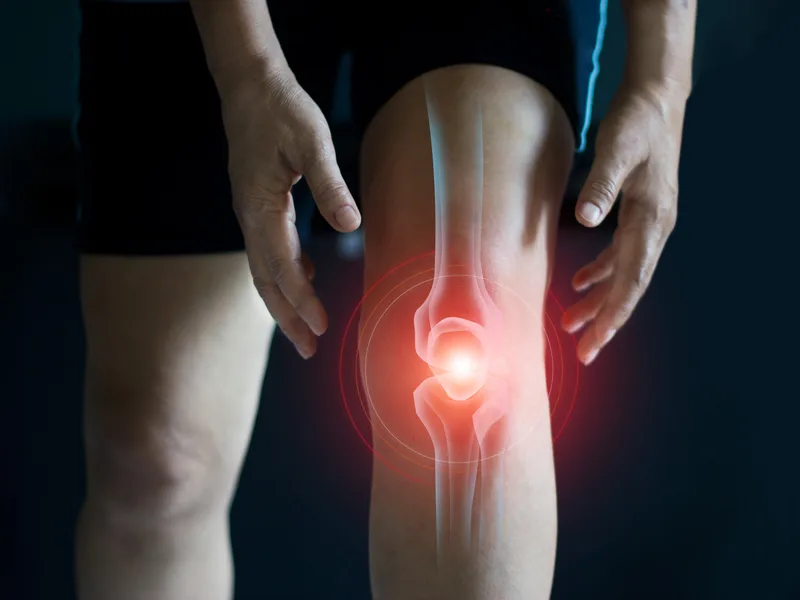
- Knee osteoarthritis — one of the most prevalent forms of OA, affecting millions of adults. Improved joint mechanics, quadriceps and hip strengthening, and reduced inflammation support are key. See our dedicated knee pain page for more detail.
- Multi-joint or generalized OA — when more than one area is affected, we coordinate care around the joints limiting you most, while keeping the whole kinetic chain in mind.
- Rheumatoid and inflammatory arthritis (co-management) — for RA and other inflammatory types, we work alongside your rheumatologist to provide supportive, non-inflammatory care and movement rehab, never substituting for the medical management these conditions require.
When to see a chiropractor in Battle Creek
Many people assume stiff, achy joints are something they simply have to live with — but early conservative care often makes a larger difference than people expect. Consider booking an exam if you notice:
- Morning stiffness that takes more than 15–20 minutes to ease
- Joint pain that limits your ability to work, walk, exercise, or sleep
- Stiffness or pain in your spine, hips, or knees that has been gradually worsening
- Back pain or neck pain that imaging has linked to degenerative changes
- Pain or decreased range of motion that you’ve been managing only with medication
- You want to understand what conservative care can and cannot realistically do for your joints
Drug-free arthritis relief — without medication or surgery
Pain medication is often the first line of treatment for arthritis — and for some patients it’s genuinely necessary. But it does nothing for the stiffness, muscle weakness, or movement patterns that accelerate joint decline. Surgery is an option for severely damaged joints, but it carries real risks and recovery time, and it is rarely the right first step. Chiropractic care sits in the middle — managing pain and improving the mechanics that protect the joint — without drugs or downtime. For Battle Creek-area patients dealing with osteoarthritis or spinal degeneration, that often means moving better, hurting less, and staying more active for longer. We’ll always be honest about what we can help with and when you need a different specialist.
Our approach
How we treat arthritis in Battle Creek
- Step 1
Thorough exam
We review your history, prior imaging, and perform orthopedic and movement testing to map which joints are affected and how much function remains — then recommend care we're confident will help, and refer out when it won't.
- Step 2
A clear, personalized plan
You leave your first visit with a plain-English explanation of what we found and a specific, time-bound plan focused on improving mobility and reducing pain — with honest expectations about what conservative care can and cannot do.
- Step 3
Gentle treatment & movement rehab
We use gentle adjustments to restore joint motion, corrective exercise to build muscle support, and massage therapy to release the tension that accumulates around arthritic joints — keeping you active and functional.
Why choose chiropractic
Chiropractic care vs. the typical arthritis routine
| Comparison factor | Chiropractic Care | Pain Meds & Surgery |
|---|---|---|
| Addresses joint mechanics | ✓Restores available motion | ✕Masks the symptoms |
| Drug-free & non-invasive | ✓Always | ✕Rarely |
| Risk of side effects | ✓Minimal | ✕Higher (meds, surgery) |
| Builds muscle support | ✓Rehab built in | ✕Seldom addressed |
| Personalized to you | ✓Custom care plan | ✕One-size-fits-all |
| Long-term function goal | ✓Stay active & mobile | ✕Often symptom management only |
Treatment options
Services we use to relieve arthritis
-
 Chiropractic Care Gentle, precise chiropractic adjustments in Battle Creek, MI that restore motion to restricted joints and relieve back pain, neck pain, and headaches at the source.
Learn more
Chiropractic Care Gentle, precise chiropractic adjustments in Battle Creek, MI that restore motion to restricted joints and relieve back pain, neck pain, and headaches at the source.
Learn more
-
 Therapeutic Massage Therapeutic massage in Battle Creek relaxes tight muscles, improves circulation, and complements chiropractic care for neck pain, whiplash, and tension headaches.
Learn more
Therapeutic Massage Therapeutic massage in Battle Creek relaxes tight muscles, improves circulation, and complements chiropractic care for neck pain, whiplash, and tension headaches.
Learn more
-
 Wellness Care Ongoing wellness chiropractic in Battle Creek, MI, catch small issues before they flare, stay aligned, and keep moving at your best with a personalized maintenance plan.
Learn more
Wellness Care Ongoing wellness chiropractic in Battle Creek, MI, catch small issues before they flare, stay aligned, and keep moving at your best with a personalized maintenance plan.
Learn more
-
 X-Rays On-site digital X-rays in Battle Creek, MI, ordered only when clinically needed, with low-dose modern equipment and a plain-English review of your findings the same day.
Learn more
X-Rays On-site digital X-rays in Battle Creek, MI, ordered only when clinically needed, with low-dose modern equipment and a plain-English review of your findings the same day.
Learn more



What causes arthritis joint pain?+
Osteoarthritis pain comes from cartilage breakdown that leaves bones closer together and less cushioned. The joint becomes stiff, the surrounding muscles tighten to protect it, and normal movement generates friction and irritation. In the spine, narrowing of the facet joints and disc spaces can also put pressure on nearby nerves, causing referred pain into the arms or legs.
Can a chiropractor help arthritis?+
Yes — with an honest scope. Chiropractic care cannot reverse the structural changes of osteoarthritis, but it can restore available joint motion, reduce surrounding muscle tension, and help you move more comfortably. Many patients find they need less pain medication and can stay more active with regular conservative care.
Is chiropractic care safe for arthritic joints?+
For most people with osteoarthritis, gentle chiropractic adjustments and soft-tissue work are safe and well-tolerated. We modify our approach based on how much joint space remains, and for advanced arthritis or inflammatory types like rheumatoid arthritis, we coordinate with your medical team.
How many visits will I need?+
Arthritis is a chronic condition, so care tends to look different than treating an acute injury. After your exam, Dr. Leatherman gives you a specific plan with realistic goals — some patients find relief in a short series of visits and return for periodic maintenance; others benefit from ongoing supportive care to stay functional.
Can chiropractic help spinal arthritis or degenerative joint disease?+
Often, yes. Spinal arthritis causes facet joint stiffening and disc narrowing that respond well to gentle adjustments and movement rehab. Restoring motion to restricted spinal levels takes stress off the most degenerated segments and frequently reduces [back pain](/symptoms/back-pain/) and [neck pain](/symptoms/neck-pain/) significantly.
Do you treat arthritis in the knee or hip?+
Yes. [Knee pain](/symptoms/knee-pain/) and [hip pain](/symptoms/hip-pain/) from osteoarthritis are very common, and improving how the joint moves — plus building the surrounding muscle support — can meaningfully reduce daily pain and delay or reduce the need for surgical intervention for many patients.
What is the difference between osteoarthritis and rheumatoid arthritis?+
Osteoarthritis is a degenerative, wear-and-tear process affecting cartilage — it is not an autoimmune disease and does not spread from joint to joint through inflammation. Rheumatoid arthritis (RA) is an autoimmune condition where the immune system attacks joint linings. RA is managed primarily by a rheumatologist; we can provide supportive care but work alongside your medical team rather than managing it independently.
Will my insurance cover arthritis treatment?+
We accept many major plans and offer affordable self-pay options. Share your insurance details and we'll verify your benefits before your first visit so there are no surprises.
Do I need imaging before I come in?+
No — you don't need to bring X-rays or an MRI before your first visit, though we're happy to review any imaging you have. We screen for red flags during the exam and order imaging only when it will change your care plan.
How can I slow down arthritis progression?+
Staying consistently active, maintaining a healthy weight, and keeping the muscles around affected joints strong are the most evidence-backed strategies. Chiropractic care supports all three — improving mobility so movement is less painful, providing specific corrective exercises, and reducing the muscle guarding that causes people to stop moving altogether.
Disclaimer: We do not diagnose or treat conditions, diseases, or symptoms. Our care is centered on improving the neuromusculoskeletal system by addressing spinal subluxations and the subluxation complex. Any improvement in overall health or function is the natural result of restoring proper spinal alignment and supporting the body's innate ability to heal itself. For medical diagnosis or treatment, please consult a licensed medical professional.